Language: EN | RU
Albion, page 2
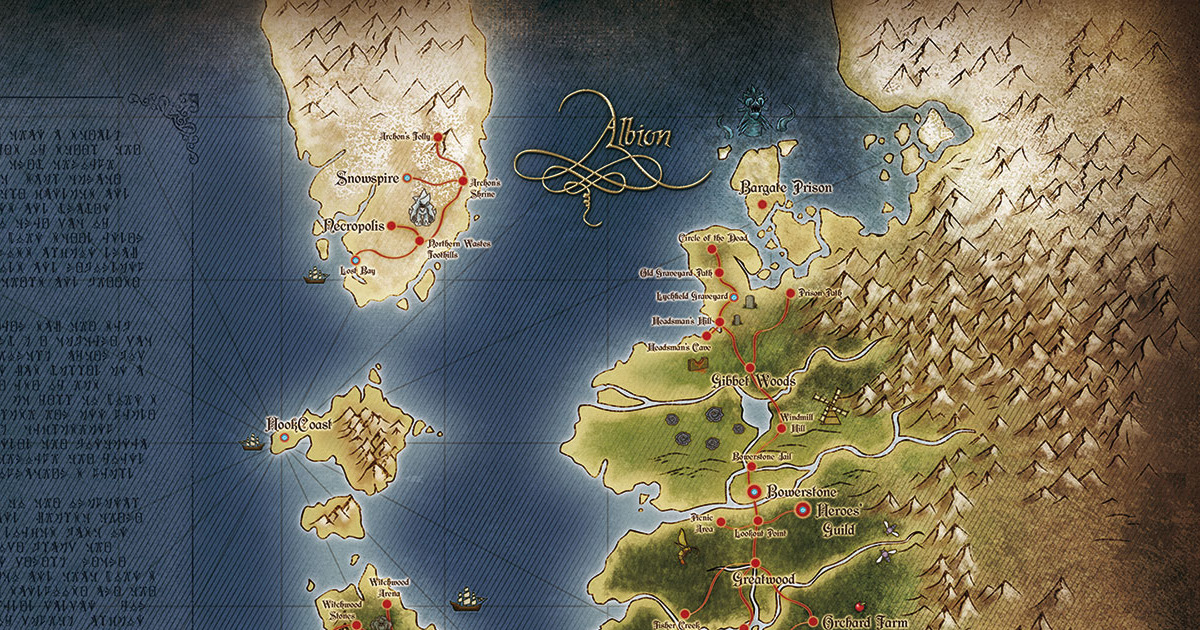
Albion is a fictional country and a continent of the same name where all games in the Fable series take place. Its name echoes the ancient name for Britain, but this is probably just another joke by the developers: the fantasy Albion is very different from the real one.
You are now on the second page of our article about Albion.
- Geography of Albion in the original games (page 1)
- -- Differences between maps (page 1)
- -- Location of the continent (page 1)
- -- Internal geography (page 1)
- Geography of Albion in the new Fable (page 1)
- Politics and laws of Albion (page 1)
- Economy of Albion (page 1)
- Religion of Albion (page 1)
- Culture of Albion (page 1)
- History of Albion in the old canon
- -- Rule of the Court
- -- Birth of William Black
- -- Defeat of the Court
- -- Rise of the Old Kingdom
- -- Fall of the Old Kingdom
- -- Dark Times
- -- Rise of Nostro and a new Albion
- -- Nostro's downfall
- -- Albion after Nostro
- -- Return of Jack of Blades
- -- Rebellion in the Guild
- -- Hero of Oakvale
- -- Destruction of the Guild and the cults
- -- Disappearance of Oakvale
- -- Events in Southcliff
- -- Role of the Hero of Bowerstone
- -- Industrial Revolution
- -- Overthrow of Logan and the battle with the Darkness
- -- Uncertain future of the kingdom
- History of Albion in the new canon
History of Albion in the old canon
Rule of the Court
In the original trilogy and Fable: The Journey, Albion's history is described in considerable detail. It begins with the legends told in the first part of Tales of Albion. When the world was still young and Albion itself was a peaceful and beautiful land, the sinister Queen of Blades, Knight of Blades and Jack of Blades emerged from a dark dimension known as the Void.
The so-called Court demanded that the people bow before them, but they refused. The trio began burning the land and repeated their demand, but the people of Albion resisted once again and were punished with a flood. They also refused to submit after a third ultimatum, so the Court twisted their minds until brother turned against brother.
In the end, the survivors submitted. Their new rulers began a brutal reign, and for generations the people obeyed their whims and built monuments in their honour.
Birth of William Black
One day, a gifted boy named William Black was born into the family of a humble blacksmith. He would become the key to Albion's salvation. As an adult, he astonished others with the sheer power of his mind, which allowed him to perform extraordinary feats. These magical abilities became known as Will.
Black was obsessed with the idea of overthrowing the Court and constantly searched for a way to achieve it. His chance came unexpectedly one night while he was simply reading a mysterious book. Suddenly, Black was transported into the Void and found himself before a throne where Jack of Blades sat surrounded by horrific figures.
Jack attempted to use an ornate sword to enslave William Black, but failed: William fought back and managed to escape to Albion with the legendary weapon.
After his return, the Sword of Aeons began speaking to Black. It promised to help him defeat the Court in exchange for his soul, and the Hero agreed.
Defeat of the Court
William Black then travelled to Albion's highest mountain, Mount Ruon. He challenged the Court to battle, and his enemies answered.
The Knight of Blades appeared first and was permanently destroyed by the Sword of Aeons. Jack of Blades came next. Their furious battle destroyed the villain's body, although his soul managed to escape back into the Void.
Finally, the Queen of Blades descended, and the battle against her raged across Albion for weeks. The blows exchanged during the fight created mountains and valleys, but in the end the Queen was defeated as well. The people were freed from slavery and proclaimed Black their king — the first Archon.
Rise of the Old Kingdom
After becoming Albion's rightful ruler, Black set out to unite the country. Through the power of Will, he could literally reshape the world according to his wishes: cities were built within weeks and extraordinary magical machines were created.
During a thousand years of peace, Albion became a great centre of trade and philosophy, but the Archon's children grew cruel and petty. They had no external enemy to fight, yet possessed their parent's magical gifts. Calling themselves Heroes, they used Will to terrorise their own subjects.
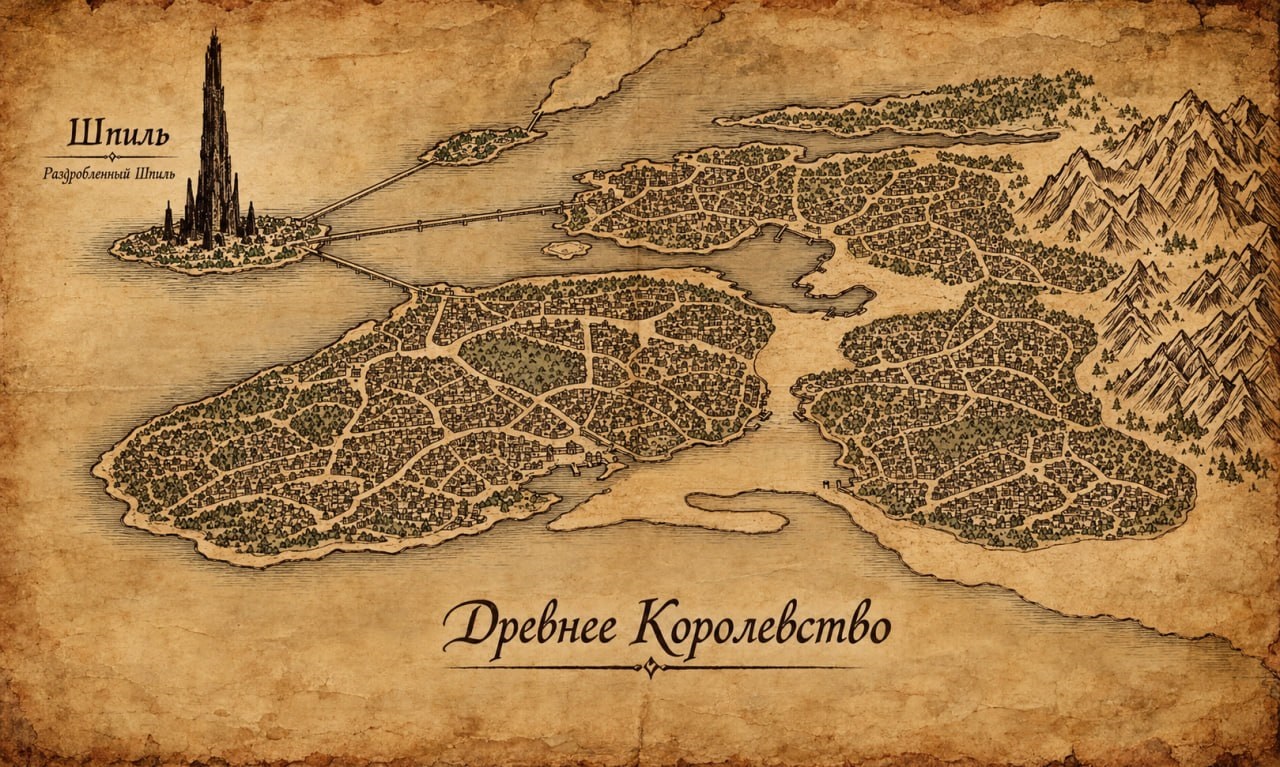
Map of the Old Kingdom. Upscaled by Egor Sychev
William Black could not stop his descendants because his journey into the Void had infected his body and soul with a terrible wasting illness. Unable to overcome the disease, Black put on his royal blue cloak and golden chainmail and disappeared, leaving the country to its fate.
Fall of the Old Kingdom
Without its monarch, Albion descended into chaos: the Archon's descendants began fighting for the right to rule, while war, famine and disease wiped out 75% of the population.
Later rulers feared being overthrown and became tyrants. The kingdom's main city was surrounded by a vast wall and placed under curfew. Order was maintained by the Archon's personal guards, who had been clad in armour since birth. Anyone who opposed the regime was executed along with their family. People began hiding their fear behind masks that reflected their social status.
But the kingdom continued to grow, and at some point the Archon ordered the construction of a gigantic tower designed to concentrate all of Will and allow him to reshape the world as he wished. When it was complete, the king entered it intending to make a wish.
No one ever learned what he wished for, because the Spire tore through the boundary between reality and the Void. This allowed the Corruptor — the dark part of William Black cast off in the Void, which sought to reclaim its power — to spread its influence. Among other things, it sent its servant, the Crawler from Fable 3, into Albion.
By this point, the fall of the Old Kingdom had already been foretold by prophets. Three great Heroes — Sol, Blaze and Stone — managed to imprison the Crawler underground and then decided to seal the breach between the worlds. They travelled to the Spire and channelled all their power into the Void. The breach was sealed, but the resulting magical explosion devastated the kingdom and transformed the Heroes themselves into Willstones.
Albion lay in ruins, and no one ever learned of the courage of Sol, Blaze and Stone. History remembered only the Archon's attempt to make a wish and the catastrophe that followed.
Dark Times
Only a few villages survived the destruction of the Old Kingdom. They were isolated from one another, and mutual suspicion descended into bloodshed. A shortage of essential resources was far from the only cause of these conflicts. Things only grew worse as the so-called Fallow Wars began, pushing Albion to the brink.
Looters searched the ruins of the kingdom for valuables, but did not understand the purpose of the objects they found and often simply threw them away or sold them for next to nothing. The remains of the once-great civilisation became overgrown, the population continued to shrink, and ordinary people struggled to find food and land or defend themselves against bandits.
Prophets were already predicting the end of the world, which might have become inevitable if not for a mercenary named Nostro, who arrived in Albion from the east. He promised to restore peace and prosperity to the land.
Rise of Nostro and a new Albion
Nostro possessed both the abilities of a Hero and a sense of honour, and he wanted to leave his mark on the world. This attracted the attention of a wise and mysterious old man known as Scythe — William Black living under another identity.
Scythe appeared seemingly from nowhere, recognised in Nostro the power of the Archon's descendants, and began teaching him the use of Will and the art of leadership. Black believed Nostro was capable of great things: reuniting Albion and rebuilding what its former rulers had destroyed.
To some extent, Nostro succeeded. He first gathered gifted men and women and founded the Heroes' Guild to train them. Using Will, he also raised an army and forced the warring population to make peace. At the same time, Nostro established the Arena in Witchwood, where disputes could be settled publicly, and ordered the forging of Avo's Tear, modelled after the lost Sword of Aeons.
It seemed that Albion might truly regain all of its former greatness, but those hopes would prove futile.
Nostro's downfall
Despite all his achievements and Scythe's teachings, Nostro fell under the influence of the power-hungry courtesan Magdalena. She corrupted both the Hero and everything he had created: the Guild became a haven for mercenaries, while the Arena turned into entertainment for the masses.
All of this went against Scythe's vision, and he decided to abandon his wayward student. Nostro continued down the wrong path. By old age, he had lost both his wife and his followers and finally recognised his mistakes — but it was too late. An assassin poisoned Nostro's food, and as death approached, the founder of the Guild called for Scythe.
His former mentor came to him, spent Nostro's final hours at his side and reminded him of the good he had accomplished. Nostro died peacefully at first light, but his creations lived on.
Albion after Nostro
Although Albion never fully regained the glory of the Old Kingdom under Nostro, it returned to a period of growth and development. The Heroes' Guild also prospered under other followers of the ways of Will, both good and evil. They established simple rules: finish every quest, take payment in advance and obey local laws when not on a quest.
His former wife, Magdalena, continued to marry and, after taking many husbands, established a hereditary line that came to rule Bowerstone. The logic of Tales of Albion suggests that she was an ancestor of the corrupt Lady Grey.
Return of Jack of Blades
At some point, the spirit of Jack of Blades found a suitable host and returned to Albion in physical form. He remained an immensely powerful enemy and wielded considerable influence.
The Oracle reveals that Jack once saved the life of Maze when he was still a child. Balverines had torn apart the future Guild leader's parents and were about to devour him as well when Jack appeared in the clearing accompanied by two Heroes.
Jack immediately killed the Balverines and then his own companions. From that moment on, Maze remained indebted to him for life, with far-reaching consequences for Albion's history.
Rebellion in the Guild
In their youth, the Heroes Maze and Weaver joined a group of Guild members who rebelled against the leadership's decision to send them only on good-aligned quests. The brief conflict spilled a great deal of blood and reduced the number of Heroes.
As a result of the uprising, Maze became one of the Guild's new leaders, while Weaver, at Scythe's suggestion, took the position of Guildmaster. Scythe believed that with age Weaver would become impartial enough to allow his students to make their own choices — and this proved correct.
Hero of Oakvale
Shortly before the events of the first Fable, the Hero Scarlet Robe — a descendant of the Archon bloodline, a renowned slayer of Balverines from Knothole Glade and an Arena champion — married an ordinary villager named Brom. After moving to Oakvale, the couple had two children.
When the future Hero of Oakvale and the seer Theresa were still young, bandits attacked their village. They destroyed the entire settlement, and the Hero was left alone, surviving only thanks to Maze. The mage persuaded the child to join the Guild so that one day he would have the chance to take revenge on the bandits.
After years of rigorous training and major victories, the Hero became famous throughout Albion and attracted the attention of Jack of Blades as a descendant of the Archon bloodline — the key to obtaining the Sword of Aeons.
The greatest Hero's true destiny was to confront Jack and cast the sword into the Void. A year later, Jack returned in the Northern Wastes in the form of a dragon, but was defeated once again — this time permanently — by the Hero of Oakvale.
Destruction of the Guild and the cults
Once the threat of Jack of Blades was gone and the Hero of Oakvale had retired, many Heroes became extremely arrogant and incapable of providing ordinary people with the protection they needed, yet continued to enjoy special privileges and treat commoners terribly.
This destroyed their reputation and led to the rise of the Oakvale Anti-Hero League and, later, a popular uprising. When the rebellion came, the Guild fell in a single day: an enraged mob armed with torches and newly invented firearms broke down its doors and burned the fortress. The few surviving Heroes attempted to hide, but were either killed when discovered or executed in the Arena.
Thus ended the historical period in Albion known as the Age of Heroes. Around the same time began the ten-year period known as the Decade of Knowledgification: as Heroes fell out of favour in Albion, respect for the cults of Avo and Skorm declined as well.
According to the book "Avo is Dead", the temples of both deities were eventually destroyed. They were soon replaced by the Temple of Light, around which Oakfield emerged, and the Temple of Shadows in Rookridge.
Disappearance of Oakvale
Three hundred years after Fable 1, a young man from Oakvale made a bargain with the forces of darkness: in exchange for the lives of everyone he loved and the very existence of his home town, he received the powers of a Hero and eternal youth. Starting a new life, the young man took the name Reaver.
Afterwards, the abandoned Oakvale and Barrow Fields were swallowed by the swamp. The homeland of the first game's protagonist became known as Wraithmarsh.
The south of the continent became completely cut off from the more northerly regions and never recovered, although Bloodstone, which arose on the site of Twinblade's Camp, benefited from the change to some extent.
Events in Southcliff
Various sources in Fable 2 suggested that not all descendants of the Hero of Oakvale were killed during the destruction of the Guild. One of them is believed to have been the Hero of Southcliff, who appeared in the mini-game A Hero's Tale on the official Fable 2 website (which is no longer available).
The Hero became known for defeating the Duke of Southcliff, who turned out to be a Balverine. Because the events described in the mini-game took place shortly before Fable 2 and not far from Bowerstone, it is believed that the protagonist may have been the real father of the Hero of Bowerstone and his sister Rose.
Role of the Hero of Bowerstone
Five hundred years after the events of Fable 1, Bowerstone's powerful ruler, Lord Lucien Fairfax, began searching for a way to bring his tragically deceased family back to life and relieve the suffering of the world. At Theresa's suggestion and after consulting the Hero of Will, Garth, he decided to rebuild the Tattered Spire.
Lucien already possessed sufficient resources to begin and paid little thought to the consequences or possible sacrifices. Filled with hope, he sailed out into the ocean aboard a frigate and discovered the foundations of the ancient tower.
The lord quickly realised that construction would be impossible without slave labour and abandoned conventional morality for the sake of his plan. To control the workers, who were dying in harsh conditions and staging rebellions, he began recruiting guards from among the winners of the Crucible.
Meanwhile, Lucien continued his research and learned that to unlock the full potential of the Spire, he would have to find three Heroes — descendants of the Old Kingdom whose bloodlines could still be traced. As the first levels of the Spire rose, he also gained the ability to manipulate Will and began experiencing strange visions. One showed a blind hooded woman — Theresa — among other figures.
At first Lucien did not understand the meaning of these visions, but later discovered that Sparrow and Rose, who lived in Bowerstone, belonged to the ancient bloodline. During a ritual at the castle, the lord decided that the children posed a threat to his plan and tried to kill them.
Sparrow survived. While Lucien continued building the Spire, the child grew up and, with Theresa's help, became a Hero. Eventually, the Hero defeated the last Fairfax. The tower passed into Theresa's hands, and she showed the Hero of Bowerstone a special vision: the Hero would become king of Albion, and one of his children would one day confront a threat from Aurora.
Knowing this fate, the Hero of Fable 2 managed to unite Albion under a single banner and introduce numerous reforms. Under the Hero's rule, the country gained a unified army and made major technological advances.
Industrial Revolution
Fifty years later, in Fable 3, the results of the Hero of Bowerstone's rule are clearly visible, although the former monarch is now dead. The throne is occupied by the Hero's eldest son, Logan.
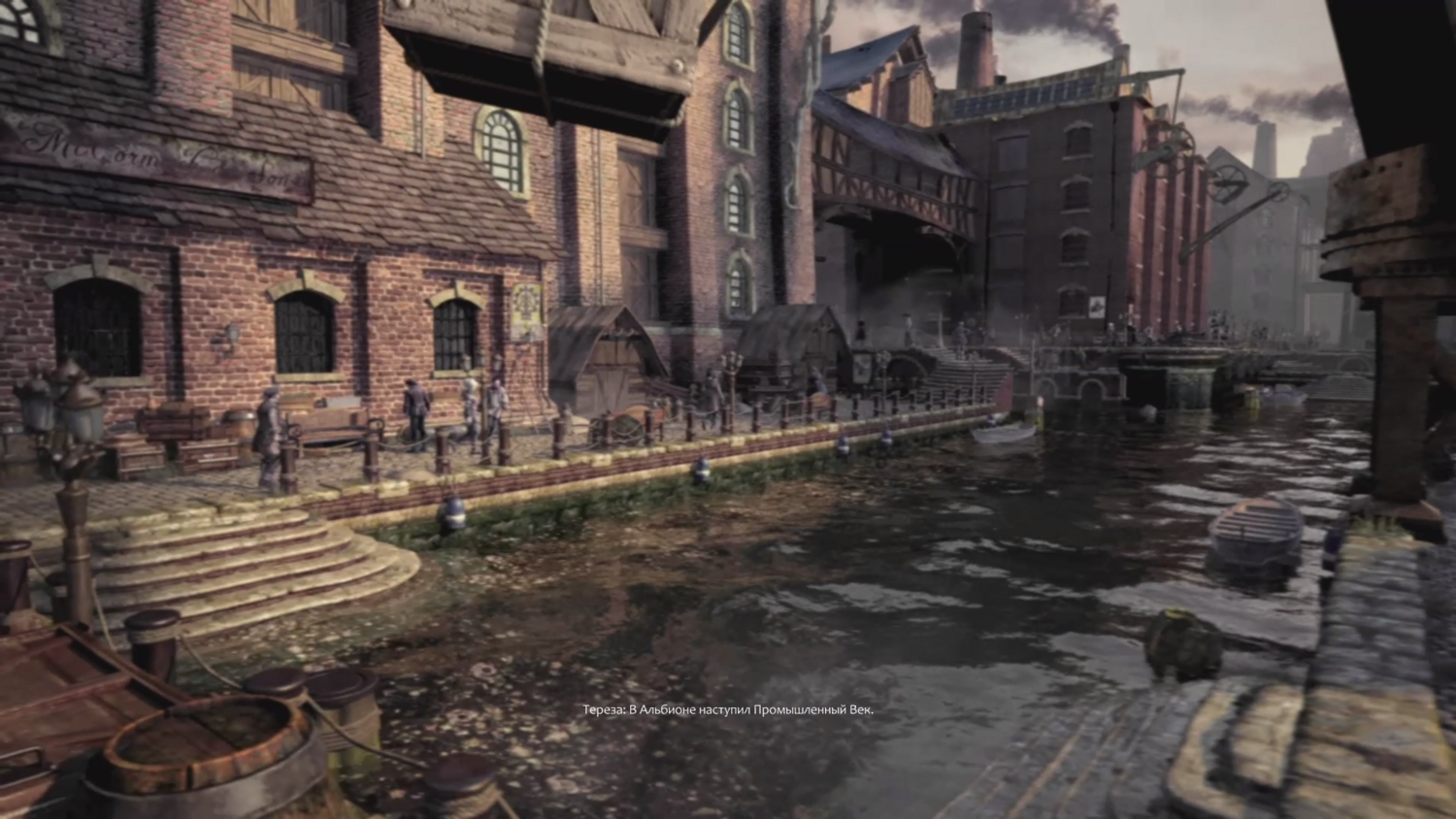
During an expedition to Aurora, Logan and his soldiers were attacked by the Crawler. The king was wounded and barely survived, after which Theresa revealed that he had to prepare Albion for an invasion by the Darkness.
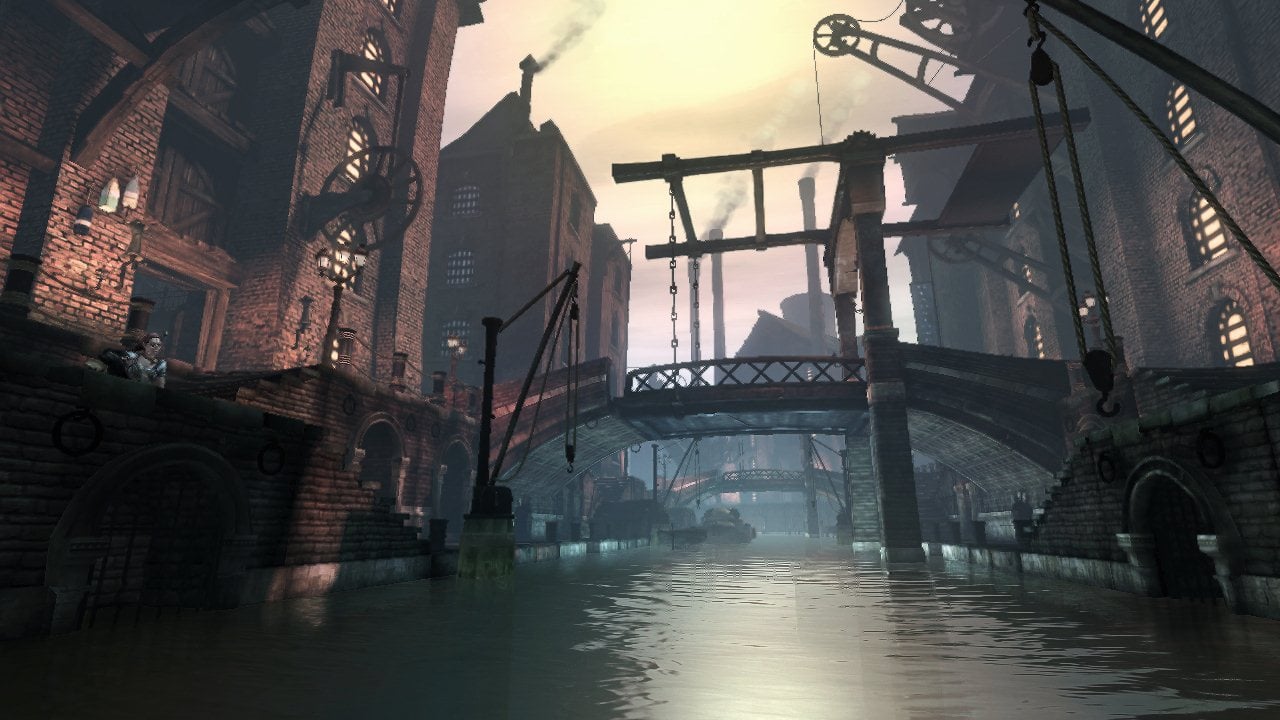
To achieve this, Logan adopted a harsh policy that his subjects saw only as tyranny. His reign was marked by militarisation, increased mechanisation of production, the construction of numerous enormous factories employing child labour and severe environmental damage. He was aided in pursuing his goal at any cost by Reaver, who had transformed from a pirate into an industrial magnate and oppressed the working class of Bowerstone Industrial.
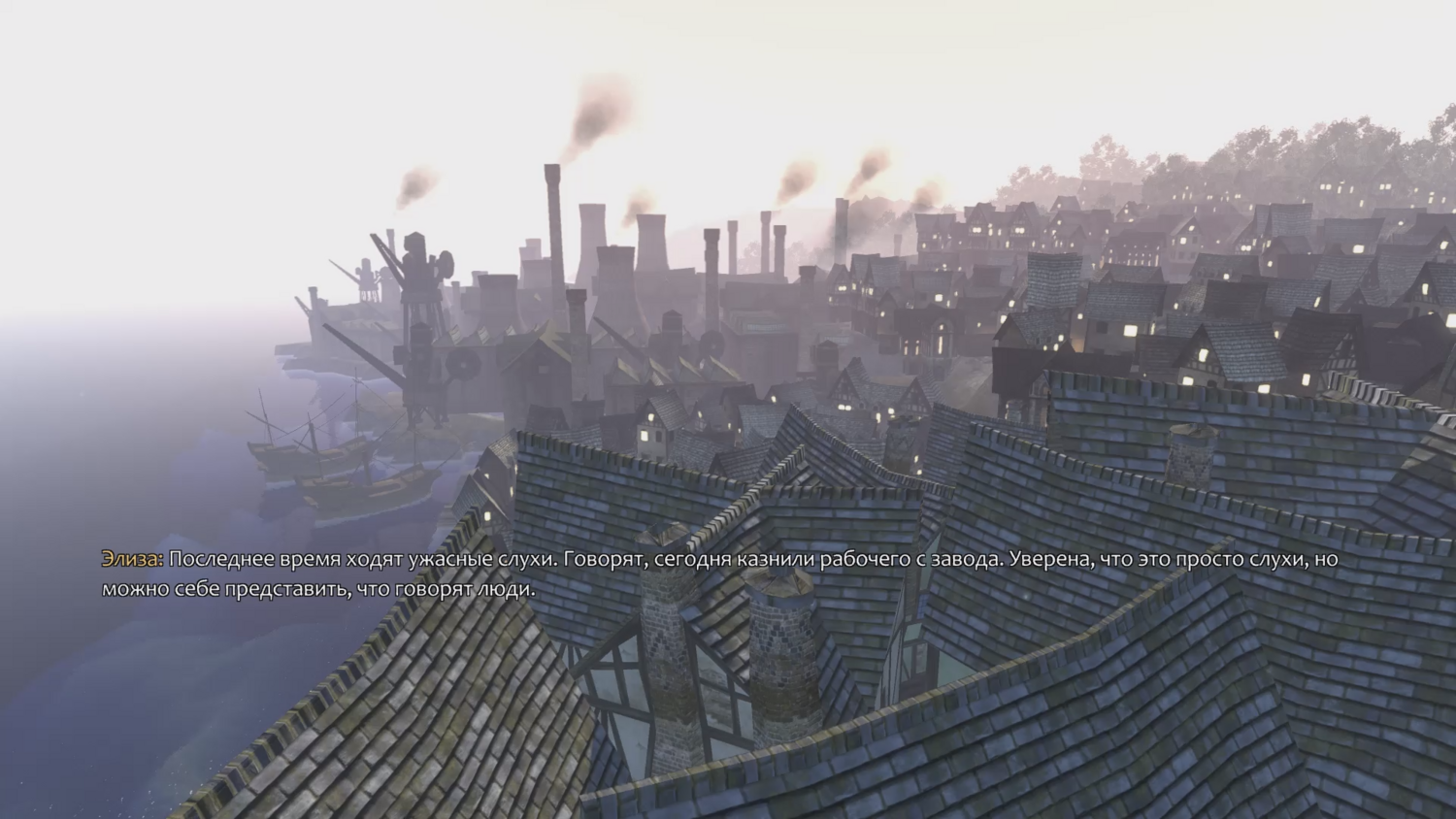
Despite considerable technological progress, all of this fuelled public discontent due to harsh laws, executions for dissent, growing poverty and hunger. Many soldiers deserted the army and became mercenaries, while the environmental consequences included deforestation, polluted land and the disappearance of almost all trolls.
Overthrow of Logan and the battle with the Darkness
Although Logan's ultimate goal was to save the kingdom, the public knew nothing about it and regarded his policies as senseless despotism. His severe methods eventually drove his younger brother, mentor and butler to flee the castle.
By this point, the prince — the canonical version of the protagonist — was already a trained warrior, and during the escape an old Guild Seal awakened the heroic abilities he had inherited. With the help of Walter Beck, he quickly gathered supporters for a revolution, and after the battle in Bowerstone, the Hero of Brightwall replaced Logan on the throne.
Theresa then revealed the truth about the inevitable arrival of the Darkness, which could only be opposed by a Hero sitting on the throne. Only one year remained to make the final preparations for Albion's economy and army. Through tremendous effort, the Hero of Brightwall defeated the Crawler and its servants and saved Albion from complete destruction.
Uncertain future of the kingdom
According to the book "Fable: Edge of the World", after around ten years of peaceful life, the Hero of Brightwall learns that the Darkness is rising again in Samarkand. The king gathers an expedition and travels to the distant desert continent to prevent the threat from spreading. There, the Hero falls into the Empress's trap and disappears.
Although the Hero manages to marry Laylah before the journey, the country apparently once again loses strong central leadership. The book reveals that Reaver gains increasing influence during this period: through his schemes, the queen, Page and other allies of the rightful ruler are imprisoned. As a result, the Hero of Skill gains the ability to issue his own laws and expand his industrial empire.
Meanwhile, the description of the Hero of Brightwall doll in Fable: The Journey states that after the king disappeared, a doll was placed on the throne, followed by a chicken. It is entirely possible that this joke does not contradict Reaver's temporary rule.
In any case, by the time of The Journey, 50 years after the events of Fable 3, Albion has no king. Reaver's factories remain, while the Hero bloodline has come to an end. The original Lionhead Studios series concludes with the future of the country left uncertain.
History of Albion in the new canon
In the revised canon of the Fable remake, Albion also suffered under the rule of the Court, but this is where the first notable differences emerge: the legends state that William Black did not defeat the trio alone, but alongside two companions — the Heroes of Blood and Bower.
The Age of Heroes began afterwards. Black immediately disappeared from the historical record, while his fellow Heroes used Strength, Skill and Will to reshape the land.
Black's former followers founded two twin cities and two capitals: Bowerstone in the south and Bloodstone in the north. The roads connecting them cut through the very heart of Deepwood and were intended to symbolise Albion's future unity. Instead, the inhabitants of the two cities went to war, resulting in three conflicts that continued all the way to the time of the new game.
Elsewhere in Albion, various Heroes created masterpieces of magical engineering, including Demon Doors, as well as works of literature and art.
In this new version of history, the Heroes' Guild was never destroyed, although Heroes themselves have almost disappeared: the protagonist becomes the first Hero in an entire generation.
1 2